
5 Shocking Ways Your Freezer Can Transform Ordinary Cookies Into Magical Treats
Editorial Team
VerifiedSenior Correspondent
5 Shocking Ways Your Freezer Can Transform Ordinary Cookies Into Magical Treats
Discover the unexpected science and simple tricks that turn frozen storage into your secret weapon for cookie perfection.
We all know the freezer is great for preserving leftovers, ice cream, and maybe even that loaf of bread you bought in bulk. But what if I told you your freezer holds the key to unlocking the *ultimate* cookie experience? Forget stale, crumbly disappointments; your appliance's coldest compartment is about to become your cookie's best friend.
It sounds counterintuitive, right? Freezing seems like it would make cookies rock hard and flavorless. But the magic lies in science, specifically in how freezing affects the structure of the cookie dough or the baked treat itself. When cookies cool after baking, moisture starts migrating. Starch molecules begin to recrystallize in a process called retrogradation, which is the primary culprit behind staleness. Freezing dramatically slows down this entire process, essentially hitting the pause button.
Think about storing cookies at room temperature. Even in an airtight container, they slowly lose their just-baked texture. The crisp edges soften, the soft centers might dry out or become overly crumbly. Refrigeration is often worse, as the cold, dry environment can actually accelerate moisture loss and make cookies taste bland. Here's where your freezer becomes the hero. By rapidly lowering the temperature, it locks in the moisture distribution and halts those starch crystals in their tracks.
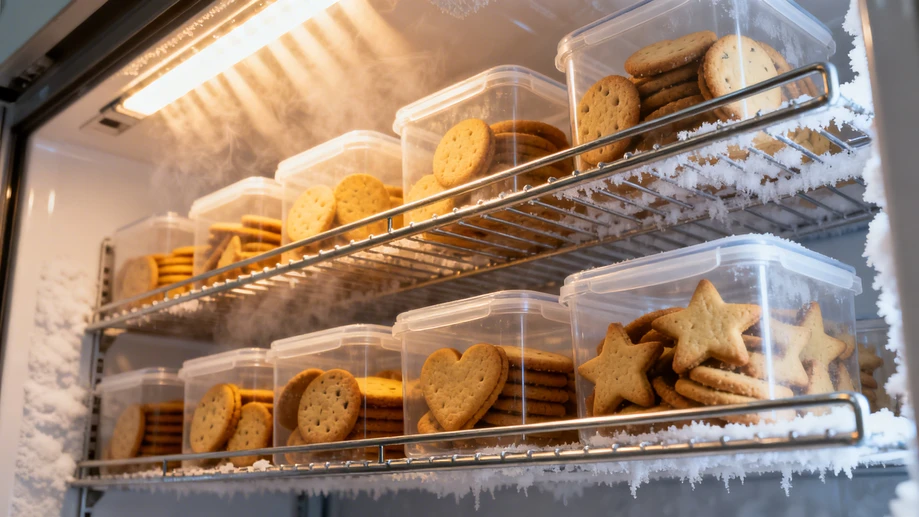
So, how do you harness this freezer power? First, ensure your cookies (either baked or as dough portions) are completely cool before freezing. Warm items create condensation, leading to ice crystals and potential sogginess. For baked cookies, place them in a single layer on a baking sheet to freeze solid first (about 1-2 hours), then transfer them to an airtight freezer bag or container, squeezing out excess air. This prevents them from sticking together and minimizes freezer burn. For dough, portion it out onto a sheet, freeze solid, then bag the frozen balls. When a craving hits? Bake frozen dough balls directly, adding just a minute or two to the baking time. For frozen baked cookies, let them thaw, still wrapped, at room temperature for about 30 minutes. This gentle thawing prevents condensation from forming directly *on* the cookie surface.
The results are genuinely transformative. Freezing preserves that coveted "just-baked" quality far longer than any pantry storage. Crisp cookies stay satisfyingly crisp, while chewy cookies retain their delightful softness and moisture. It allows you to bake in larger batches without sacrificing quality, ensuring a perfect cookie is always within reach. It turns your freezer from a simple storage box into a tool for creating consistently delightful, seemingly fresh-baked magic. Who knew the secret to cookie nirvana was hiding behind the ice trays all along?