
5 Hot Tips to Master Your Sizzling Stone Bowl Bibimbap Like a Pro
Editorial Team
VerifiedSenior Correspondent
5 Hot Tips to Master Your Sizzling Stone Bowl Bibimbap Like a Pro
Unlock the secrets to that perfect crispy rice layer and balanced flavor every time you mix it up.
Hearing that satisfying sizzle when a hot stone bowl of bibimbap lands on your table is pure joy. That iconic sound promises the crispy rice (nurungji) we all crave. But achieving that perfect golden crust and ensuring every bite is deliciously balanced at home? It takes more than just tossing ingredients together. Mastering the art of bibimbap is all about technique, especially when it comes to the bowl itself.
First things first: your stone bowl needs to be HOT. Like, seriously hot. This isn't just for the initial drama. Preheating the empty dolsot bowl in the oven (around 400°F/200°C for 15-20 minutes) or carefully on the stovetop is non-negotiable. A lukewarm bowl won't give you that signature crackling rice base. Think of it as preheating your skillet for the perfect sear on a steak. The intense heat is what instantly crisps the bottom layer of rice upon contact, creating that magical texture.
Now, about the rice. Don't just plop it in! Once your bowl is scorching hot, carefully add a thin layer of sesame oil or perilla oil to the bottom. This isn't just for flavor; it acts as a conductor, helping the heat transfer efficiently to the rice and promoting even crisping. Then, gently press your slightly cooled, day-old cooked rice (preferably short-grain) into an even layer across the bottom and slightly up the sides. Fresh, hot rice is too moist and will steam instead of crisp. The gentle pressure ensures maximum surface contact with the hot stone.
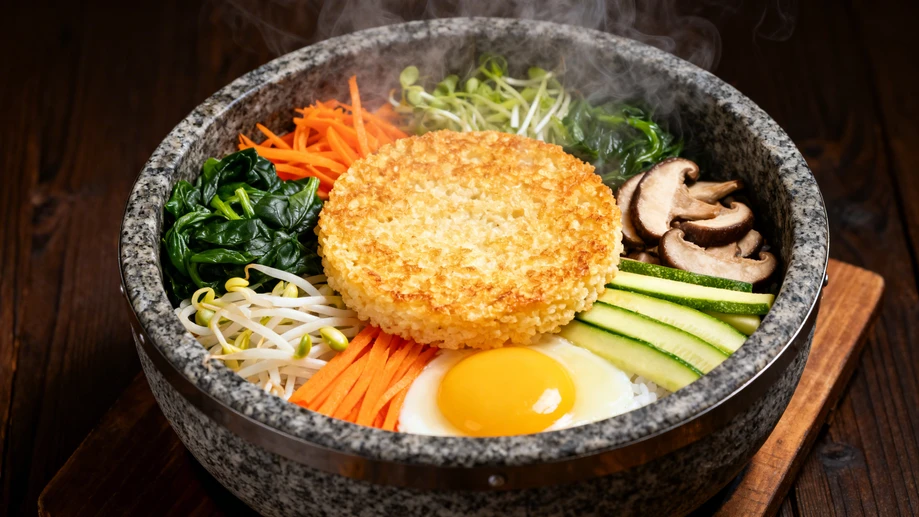
Here's where many go wrong: piling *all* the toppings on immediately. Resist the urge! Arrange your beautifully prepared, room-temperature or slightly warm toppings (like sautéed spinach, mushrooms, carrots, zucchini, bean sprouts, and your protein) artfully on top of the rice, leaving the very center exposed. Place the raw or lightly cooked egg yolk right in that center spot. Why? Because when you add the gochujang (Korean chili paste) sauce and start mixing, you want the residual heat from the bowl and rice to gently cook the yolk as you stir, creating a rich, creamy emulsion that coats everything. Adding sauce too early or mixing everything before serving risks overcooking delicate toppings and prevents that perfect saucy blend.
The final, crucial step? Timing and mixing technique. Serve the bowl immediately while it's still audibly sizzling. Place it on a wooden trivet or thick plate to protect your table. Hand everyone their spoon. Now, instruct them to add their desired amount of gochujang sauce directly onto the exposed yolk and toppings. Then, using the back of the spoon, start mixing vigorously from the center outwards, scraping the crispy rice from the bottom and sides as you go. The goal is to incorporate the yolk and sauce thoroughly while distributing the crispy bits evenly throughout the hot rice. Don't be shy – get in there and mix! The sizzle will subside, replaced by the incredible aroma of toasted rice, savory toppings, and spicy-sweet sauce melding together. That's your cue: perfection is served. Your kitchen will smell like a Seoul alleyway, and your taste buds are in for a treat.