
Is Your Bowl of Tom Yum Soup Actually Authentic or Just Acidic Chaos?
Editorial Team
VerifiedSenior Correspondent
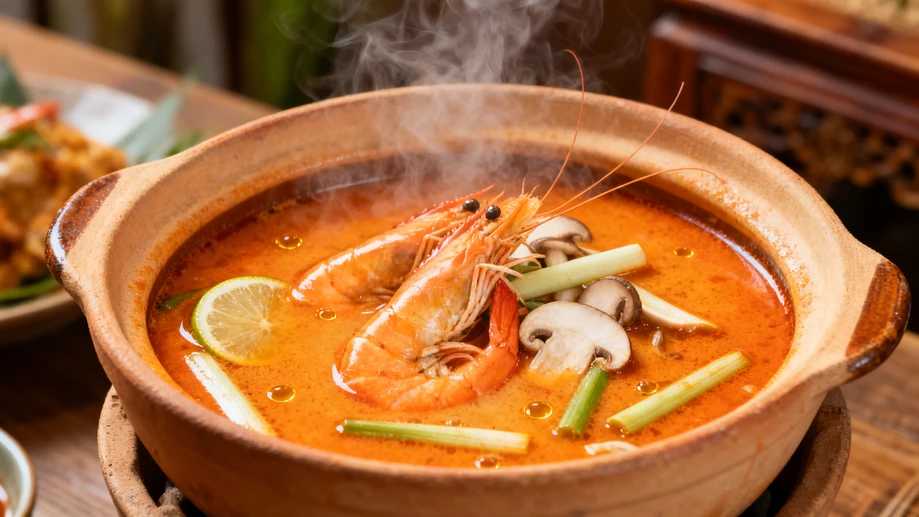
Is Your Bowl of Tom Yum Soup Actually Authentic or Just Acidic Chaos?
Demystifying the most common misconception about Thailand's iconic sour-spicy broth that even food lovers misunderstand.
Walk into any Thai restaurant abroad and you'll likely encounter eager diners sweating over fiery bowls of tom yum soup, grinning through the pain as if spice endurance were the ultimate test of authenticity. This widespread spectacle has cemented a global belief: the hotter the tom yum, the more "real" it must be. Social media feeds overflow with videos of friends daring each other to finish volcanic-looking versions, reinforcing the myth that this ancient soup is primarily a vehicle for heat.
Yet authentic tom yum goong, Thailand's national treasure, follows a delicate philosophy known as "rot chart" – the balance of four essential flavors. Sourness from lime, saltiness from fish sauce, subtle sweetness from palm sugar, and yes, warmth from chilies must harmonize like musical notes. Traditional recipes call for just 2-3 bird's eye chilies per liter of broth, emphasizing aroma and complexity over raw burn. The chilies release their floral perfume through gentle simmering rather than aggressive boiling, creating depth rather than destruction.
Ironically, the "scorching equals authentic" approach often destroys the soup's intricate layers. Overloading with chilies overwhelms the fragrant lemongrass and kaffir lime leaves, while excessive heat masks the sweetness of fresh river prawns and the bright acidity of tamarind. Worse still, restaurants catering to the spice=authenticity myth frequently compensate for unbalanced heat by drowning the broth in sugar or artificial enhancers. What arrives as a thrilling challenge on your table may bear little resemblance to the nuanced symphony a Thai grandmother prepares.
Spotting a well-balanced tom yum requires engaging more senses than just pain receptors. Observe the broth: it should be clear and shimmering with essential oils, not murky or oily. Gently inhale before sipping – you should detect distinct citrusy and herbal notes alongside the chili. When tasting, the initial tang should awaken your palate, followed by savory depth, then a slow-building warmth that lingers pleasantly without numbing. The true mark of mastery? You'll crave another spoonful immediately after swallowing, not a glass of milk.
This isn't about discounting spice entirely. Chilies remain vital, but their role is as a supporting player in tom yum's orchestra, not the conductor. Next time you order, consider requesting "phet tamadaa" (medium spice) to experience the intended balance. You might discover how the subtle sweetness of cherry tomatoes pops against the lemongrass, or how galangal's piney notes dance with the lime. The magic of tom yum lies not in surviving the heat, but in savoring the conversation between its elements.
Beyond flavor, the balance obsession reflects a cultural wisdom. Thai cuisine views food as medicine, and extreme heat can irritate digestion while masking freshness. A properly balanced tom yum offers anti-inflammatory benefits from galangal and lemongrass, vitamin C from lime, and probiotics from fermented fish sauce – advantages lost in a chili onslaught. The soup becomes a lesson in moderation: enough fire to energize, enough sour to refresh, enough sweetness to comfort.
So let go of the notion that tears and sweat measure tom yum's worth. True authenticity lies in that fleeting moment when all four flavors align on your tongue – a bright spark of lime, a savory whisper of fish sauce, a honeyed hint of palm sugar, and a warm glow of chilies that illuminates rather than incinerates. That's when you'll taste centuries of Thai culinary wisdom in a single spoonful.